
Gastric Sleeve Surgery
Quality of life varies from person to person. Holistic health is the sine qua non of quality of life. Slimming down may be a visual need for some and a way to get rid of health problems for others. Healthis, your holistic health advisor, will research the safest methods for you to lose weight and evaluate gastric sleeve surgery as an option with you. Gastric sleeve surgery processes to help you lose weight and reduce your risk of potentially life-threatening weight-related health problems;
- Analysis of whether this intervention is the right one for you and counseling to help you see the whole picture
- Evaluating physicians and health centers and choosing the best option for your needs
- End-to-end planning and budgeting of your health trip
- Support for post-operative care and recovery
- It can support you with all assistance services that will make it easier for you to return home in good health.
Now, let’s examine the subject of sleeve gastrectomy, which is preferred by more and more people, together in detail:
Gastric sleeve gastrectomy, also known as laparoscopic sleeve gastrectomy (LSG), is an operation for the treatment of obesity in which the stomach is reduced in size. The method is based on the principle of food restriction: The surgery results in a reduction of the stomach volume to the size of a small banana on average. As a result, the stomach is filled with a small amount of food and the stomach filling leads to an expansion of the stomach wall, which triggers a feeling of fullness.
In addition, sleeve gastrectomy initiates hormonal processes that suppress appetite. There is evidence that the stomach produces less of the hunger hormone “ghrelin” after sleeve gastrectomy, thus further reducing appetite. At the same time, some appetite suppressing signals are released directly.
The operation also has a positive effect on various metabolic processes (metabolism). For this reason, stomach reduction operations are increasingly referred to as metabolic surgery. For example, if many patients have existing type 2 diabetes, this problem improves markedly after surgery.
Gastric sleeve gastrectomy has become a common procedure today. For example, in Germany, sleeve gastrectomy is the most common procedure in bariatric surgery.
What is sleeve gastrectomy?
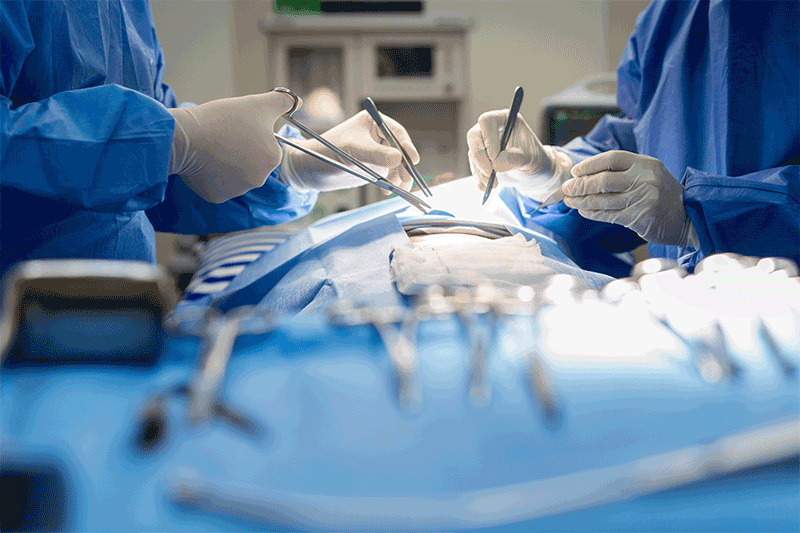
LSG or sleeve gastrectomy is performed in hospital under general anesthesia. Your surgeon will make about 5 small incisions in your abdomen. A long, thin scope with a small camera at the end will be used to perform the operation. Instruments pushed through the incisions will be used to remove about 80% of your stomach. Your surgeon will perform the operation while you watch the images on a TV screen in the operating room.
In this surgery, the part of your stomach that curves outwards, called the fundus, is removed. Once the fundus has been removed, your surgeon will turn the rest of your stomach into a tube shape that looks like a banana. Because you will have a much smaller stomach, you will feel full much faster at mealtimes and therefore eat less.
The fundus secretes a hormone called “ghrelin”. This hormone is partly responsible for making you feel hungry. Therefore, removing the fundus and consequently not secreting the hormone ghrelin will also help you lose weight later on by reducing your hunger.
Gastric sleeve surgery takes about 2 hours. Most people stay in hospital for about 2 days after surgery.
Is sleeve gastrectomy suitable for you?
Laparoscopic Sleeve Gastrectomy, also called sleeve gastrectomy, is usually performed on extremely obese patients with a body mass index (BMI) over 35 or 40. Patients usually lose most of their excess fat after sleeve gastrectomy alone, but if weight loss stops or weight regain begins, the second step of the bypass may be performed in some patients. For patients who are obese but not morbidly obese, gastric sleeve surgery is a suitable operation with minimal risk.
 What are the advantages of sleeve gastrectomy?
 What are the advantages of sleeve gastrectomy?
Laparoscopic Sleeve Gastrectomy has emerged as an effective method for weight loss. Depending on preoperative weight, many patients can lose 40-70% of their weight in the first year of surgery. As a result, patients may see improvement in obesity-related comorbidities such as diabetes, hypertension, abnormal cholesterol levels, stroke.
Some advantages of sleeve gastrectomy are listed below:
- Postoperative pain is considered less than alternatives
- Shorter hospital stay
- Faster return to work
Duration and after gastric sleeve surgery
The average duration of sleeve gastrectomy surgery may vary. Laparoscopic Sleeve Gastrectomy surgery takes 1.5 to 3 hours on average and the average postoperative hospital stay is between 2 and 5 days. Patients usually return to normal activities within 2 weeks and recover completely within 30 days.
The success rate for weight loss after sleeve gastrectomy is typically 60% of excess body weight. Weight loss usually continues for 18 to 24 months after surgery.
Weight loss surgery has been reported to improve conditions such as sleep apnea, diabetes, high blood pressure and high cholesterol. Many patients report an improvement in mood and other aspects of psychosocial functioning after surgery.
What are the risks of gastric sleeve surgery?
Patients choosing laparoscopic sleeve gastrectomy should consider the potential risks before the procedure. The risks of gastric sleeve surgery are relatively low. The risks of the surgery include blood clots, blood loss and breathing problems, as well as heart attacks and strokes. After surgery, patients should watch for signs of infection in the lungs, kidneys or bladder. Other risks include vomiting from overeating, leakage around the stomach staples and damage to internal organs during surgery, as well as reduced nutritional value intake as a result of less food consumption due to stomach shrinkage.
Nutrition after sleeve gastrectomy
The diet recommended by your doctor after sleeve gastrectomy should be used during the first year. Usually the diet starts with liquid protein drinks and water for 2-4 weeks. Patients gradually progress to thicker foods and can consume foods such as seafood, eggs and cheese along with other normal foods for up to 8 weeks. In general, the recommended diet includes 500 Kcal calories, 70 g protein per day, 30 g fat per day and 40 g carbohydrates per day. Calorie consumption continues to increase up to twelve months, after which regular calorie consumption varies depending on activity level, age and gender.
Laparoscopic sleeve gastrectomy is a procedure that can help obese people lose weight and the surgery is an effective method as it causes patients to eat less because their stomach is smaller.